

I moved from Saint Paul, Minnesota to Pittsburgh to attend Carnegie Mellon one year ago today. It was a big step personally and a long distance to travel so that I could gain skills to make a better life for myself. The life I had was very good and Saint Paul is a great city, but my future was more important than my past. Although I only lived in Minnesota as an adult, it is home.
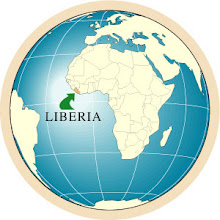
While I knew that The Twin Cities has a large Liberian population, I didn't realize the extent of its Liberian connection until getting to Liberia. I've met two deputy ministers who've called Minnesota home. I was very surprised when the minister who coordinated our arrival knew the organizations on my resume. They are not national organizations, so I don't expect people to be familiar with many of them. The minister took some pleasure in his full awareness. The conversation and familiarity were a welcomed start to my time here.
I've come across Minnesota connections both in my work and on the street. For work, I've spent a lot of time combing import data. One of the first example documents that I received cleared used clothing and other miscellaneous items for import. The seller lived in Brooklyn Park, Minnesota, a Minneapolis suburb and home to a sizable Liberian community. The document acquainted me with the import process and it alerted me to one of the by products of migration - cultural artifacts.
Dokoflag, the local term for second-hand clothing, is the best example because it is on every street of Monrovia. Today, as I entered the Ministry of Commerce, I met Gray. I introduced myself because he was wearing a t-shirt with Eagan CCM Squirt Hockey emblazoned on it. Eagan is a Twin Cities suburb. The day prior, I saw a man wearing an SEIU Local 284 t-shirt; it's a labor union with an office in South Saint Paul, just a few miles from Eagan. During my first week, I saw a man in a 2007 Twin Cities Marathon 10 Mile finisher shirt. I also own that t-shirt because I ran in that race and finished well. I'm sure the man in my t-shirt didn't participate.
Each example of dokoflag reminded me that as people flow out of a place, they keep many connections and send things back to their place of origin. Exchanges keep taking place. The path over which they travel seems to get more extensive. Sometimes, human capital returns and runs a ministry or even becomes president. Dokoflag is just the most tangible example.
Between meeting ministers and other government staff that have lived in Minnesota, seeing import documents with familiar suburbs and dokoflag, I'm reminded of Minnesota often. It is amusing to encounter unexpected connections a quarter of the world away. I escaped the state and now it chases me.
I'm tempted to find out the total value of imports by US State since I have access to the system. I'd like to compare the geographic distribution of Liberians to the import data. I'm sure that some expected patterns would emerge. Until then, my eyes are open for signs of home.
Today's temperatures:
| Monrovia | Minneapolis | |
| Temperature: | 28c | 29c |
More on dokoflag
The words and images on dokoflag lose much of their meaning outside of American culture. No one plays ice hockey in Monrovia, few are in labor unions and I don't think any organized race exists. The shirts just have to look nice enough to wear about town. Many dokoflag look new.
Dokoflay extends beyond t-shirts to any type of clothing. Sometimes its more Nordstrom Rack than Goodwill. Liberians buy dokoflag, so these may be second hand but they are not threadbare.
For more information on topics in this post:
Liberia's Balance of Trade including info on used clothing
Minneapolis Star Tribune: A People Torn: Liberians in Minnesota a multi-part report from 2007

No comments:
Post a Comment