Sunday, August 22, 2010

Trip Preparation and Good-bye


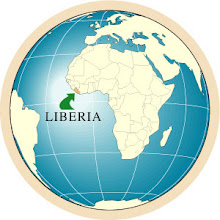
Picture 1: The 16 Masks of Liberia

-

H. John Heinz III College resumes classes on Monday, August 23rd, 2010. The internship is officially over. This is my final post.

No longer a living document, this blog will now take on a different function. In the event that any future Heinz students are contemplating an internship in Liberia this blog will serve as a quick first reference. There are reading material links to the right, a picture gallery slide show, and 50+ blog posts ranging from food and culture to deeper policy issues like imports and exports.

In this final post I will attempt to answer the first question that all interns will ask,

“How do I prepare for an internship in Liberia?”

If you are a Heinz student, or another intern from another school, and you have been accepted to an internship in Liberia you will need to do two things:

1. Read
2. Pack

**

Trip Preparation Part One - Read

I suggest starting with the CIA World Factbook [1]. Without knowledge of the past and the people of Liberia you will lack the necessary context for your work.

After the CIA World Factbook I would suggest reading a few papers from the Center for Global Development [2]. They have Liberia specific papers and are a great resource.

After that, you should go to the Library for a few books written about Liberia, a list is already provided for you on the right hand side of the blog. I would suggest reading at least two of them.

Next to last, visit Lift Liberia [3] and download the PRS, Poverty Reduction Strategy. This document will give you a clean overview of the direction Liberia wants to be going.

Finally, you should leverage your personal networks. There is a good chance you will be able to meet someone in Pittsburgh happy to talk about Liberia.

**

Trip Preparation Part Two – Pack

Money

First of all, Monrovia is expensive. Luckily in 2010 we confirmed the existence of six (possibly eight) ATM machines in Monrovia. You will need to bring cash with you, but you do not need to bring your entire budget with you. Bring enough cash with you to get by for 3 weeks.

Medical

Next, you will need to get Malaria pills. I prefer the Malarone even though it is the most expensive option available. You should be looking into all available options for Malaria prophylaxis immediately. You will need to start taking your Malaria pills before leaving the USA, so take care of this now.

You will need to get a yellow fever vaccination shot. The shot can be gotten very easily about 10 blocks from Heinz in Oakland. If you need better directions you can ask someone at the Carnegie Mellon Health Services center at the corner of Forbes and Morewood. You will need to have your yellow fever shot ten days [4] before arriving in Monrovia, so take care of this now.

Get medical evacuation insurance. In the unlikely event that you need serious medical attention you will need some extra insurance to cover the cost of evacuation to the USA. Med-Evac insurance is not expensive and will cover your emergency travel back to the USA.

Clothing

On occasion you will get invited to serious government events. You need to bring at least one nice pair of clothes, probably two but no more than two. I brought two suits, one navy and one grey, and they served me well. Make sure to bring rugged shoes and work shoes, you will need both types. There are a few night-spots and dance clubs in Monrovia. If you feel like taking in some night-life, bring one pair of ‘heading out to the club’ clothes. Work attire will be business casual. Three sets of business casual attire is plenty.

Computer and USB thumb drive

You will need a laptop computer. There is no argument about this concept. You simply will not be able to function as a policy consultant intern or management consultant intern without one. Also, make sure to download any software you might need before the trip because even at the best speeds available in Monrovia it may take hours to download even the smallest programs. If you do not have a .pdf reader program, download one now. The internet may be too slow for file transfers, on those days you will need a USB thumb-drive. One Gigabyte served me fine.

Toiletries

You can find soaps and toothbrushes etc. in Monrovia, but due to the high price of importation you may be better off purchasing them in the USA. Also, bring one spare roll of toilet paper, as a precaution.

Weight

Find a way to check the weight of your bags before going to the airport. On the way back from Liberia we needed our bags to weigh less than 23kgs each. Check the airlines' baggage regulations after you buy your tickets.

Fun

Remember to pack something fun. If you have never experienced this kind of travel or work it is a very good idea to bring at least one fun thing that reminds you of home. I brought my hammock.

General Recommendations

Camping towels are light weight and absorbent. Head-lamps are very handy if the lights go out. Put some movies on your computer to watch. A small thermometer can be handy to check your temperature. Pepto-Bismal makes chewable tablets that are easy to carry and lightweight. Swiss-army knives or omni-tools like a Leatherman are useful but heavy. A spare disposable camera can serve as a fail safe if your regular camera gets lost. The beach is all around you, bring a swimming suit. A compact travel umbrella will be useful in the rainy season. A few powdered drink mix packs ,like crystal light, travel well and can be added to odd-tasting purified water. You will make friends... a few small gifts from the USA may be a good idea.

-

[1] CIA World Factbook

[2] Center for Global Development

[3] Lift Liberia

[4] Centers for Disease Control and Prevention

Tuesday, August 17, 2010

Fufu Finale'

We are in Washington DC gathering information for our internship. It will be several days before our plane departs Pittsburgh for Monrovia.

“What’s your favorite Liberian food?”

“Fufu and soup.”

“What’s Fufu?”

**

We order Fufu at a restaurant in Monrovia. It is our first week of the internship and some co-workers invited the three of us to lunch.

Kenneth takes a wonderful picture of his Fufu to post on the blog. I try to eat the Fufu but it’s difficult.

“You don’t chew it, you swallow it with the soup.”

It isn’t the taste or texture that is causing me trouble. My stomach is upset and not used to these ingredients or these spices yet. I barely have a fifth of my meal before I stop eating. I vow to eat a meal of Fufu before I leave Liberia.

**

We are in Trice, a local restaurant with a rooftop bar and decent prices.

Trice serves very good Fufu according to Kenneth. Also according to Kenneth the Fufu goes down easier with a stout beer.

It is our last week in Liberia. I am working on my ‘bucket-seat list’, a list of things I want to do in Liberia before I get on a plane back to the USA. Fufu is one of the remaining items on my bucket-seat list.

I feel ready. I have been eating Liberian food for two months now.

My Fufu comes with a delicious goat soup. I learn to take smaller bits of the Fufu on my spoon and then dip the spoon in my soup. I eat almost the entire meal.

The meal is filling enough that one serving of Fufu and soup could feed a person for an entire day.

-

This is my final post on Culture and Food in Liberia. It is fitting that the topic is Fufu because Fufu was the first Liberian food I learned about before the trip.

A definition of Fufu from thefreedictionary.com states:

n. Fu-fu

A thick, doughlike West African food made by boiling and pounding a starchy vegetable such as yam, plantain, or cassava. [1]

For a recipe to make Fufu follow this link:

AfricanFoods.co.uk[2]

-

[1] thefreedictionary.com

[2] AfricanFoods.co.uk

Friday, August 6, 2010

'Potluck Dinner Ninja' Meets Imported Supply with Imported Demand

Hi,

This marks the 5th and final post in my series on game theory explanations for systemic problems in international development. I must warn you, this post is very different from the other posts. It is not so much about Liberia as it is about the type of work we are doing in Liberia. So if you are looking for a travel story please scroll down.

In this post I will be using the concept of a potluck dinner to discuss the value of voluntary exchange and using that framework to explain the problem of imported supply coupled with imported demand. I will also be introducing the concept of an Edgeworth box[1].

First up, you are probably wondering what a ‘Potluck Dinner Ninja’ is. The idea of a potluck dinner is that each person or family brings a dish to the dinner and then everyone shares. The two main benefits of a potluck dinner are (1) community bonding and (2) by cooking only one type of food you can try many other types of food. Usually a potluck dinner turns into a recipe swapping, neighbors talking, story sharing, joke telling - good old time. Now enters the Potluck Dinner Ninja. The Potluck Dinner Ninja brings a dish, but does not share the dish, nor does the Potluck Dinner Ninja sample anyone else’s food. The Potluck Dinner Ninja does not talk to anyone, but keeps to the shadows. The only evidence the Potluck Dinner Ninja even came to the dinner is a mysterious thank-you card left for the host.

The format of a potluck dinner is an economic masterpiece. Each person putting in some effort will receive in return much more gain than would be possible individually. By cooking your chicken, you can now try one neighbor’s tacos, someone’s homemade apple pie, someone else’s banana fried rice and if you feel adventurous maybe some squid. First, each person uses their individual skills (in this case recipes) and labor. Then, by sharing those goods in a voluntary exchange each person’s gain from that effort is multiplied. You yourself could not have cooked this many different types of food in ten hours, yet by the brilliant formatting of a potluck dinner you only spent two hours cooking. By the simple act of voluntary sharing you have created value.

Or, to use an Edgeworth box in three steps: [1]

**

Step 1 - Basic Graph


In a basic graph we measure from a starting point of zero in the bottom left corner. As the graph moves away from the starting point it means we have more stuff. Basic graphs can measure two items at the same time by placing those measurements on two different lines, usually marked as the X axis and the Y axis. The value of measuring two items at the same time is that we can now compare the two. The real value in a graph is the ability to compare two different measurements.

Step 2 - Graph with two Indifference Curves


An indifference curve is a line that compares two measurements at the point where you are equally happy. On line a we see two dots. Each dot represents an amount of chicken and an amount of tacos. One dot has more chicken than tacos and the other dot has more tacos than chicken. The point is that we like the two dots on line A equally. We actually like all of the spots on line a equally. We are just as happy with 8 chicken and 2 tacos as with 3 chicken and 5 tacos.

If we move from the curve with two dots to the curve with one dot we get more value. We prefer the indifference curve that is farther away from the bottom left corner. Any spot on line b is preferred to any spot on line a. We prefer 5 chicken and 5 tacos to all options on line a.

Line b is better than line a.

Step 3 - Edgeworth Box


In an Edgeworth box we have two sets of graphs with indifference curves put together. The bottom left corner is where you have no stuff, but your neighbor has all of the stuff. The top right corner is where you have all of the stuff and your neighbor has none of the stuff. Your goal is to move towards the top right corner and your neighbor’s goal is to move towards the bottom left corner.

We start at the dot in the bottom right corner. You have 10 pieces of chicken and your neighbor has 6 tacos. As you trade chicken for tacos both you and your neighbor both move to a higher indifference curve. As you trade you are both better off.

This is why we love trade. We get more value without creating more goods. You didn’t cook more tacos and I didn’t cook more chicken, but miraculously we are both better off from this voluntary exchange.

As we move towards the center of the Edgeworth box both You and your Neighbor gain value. Behold the economic miracle of voluntary exchange modeled as a potluck dinner.

**

Now that we see how fantastic a potluck dinner is, by contrast we can appreciate the irrational nature of the Potluck Dinner Ninja.

The Potluck Dinner Ninja does not join in conversation, does not experience the value multiplying effect of sharing food. The Potluck Dinner Ninja does not move to a higher indifference curve, does not build social capital by talking with neighbors. What would be the point of even coming to the potluck if you don’t share food or talk to people?

Or to put it into a decision matrix:


The rational choice is to Share in the potluck. Now behold the irrational nature of the Potluck Dinner Ninja.

-

What does the Potluck Dinner Ninja have to do with imported goods in developing countries? Well…

A developing nation can sometimes experience large gains in import consumption. It only makes sense. If your nation can no longer make sugar, or salt or bread or anything, you will need to import those items. The supply of those items is imported, not made locally. Developing nations will necessarily go through a process of needing imported goods, and I am not arguing against imported goods. The problem I want to address is bubble-markets from imported demand coupled with imported supply.

Imported demand is essentially all of the market place activity created by ex-pats. These people are temporary and their demand for the goods they purchase is also temporary. When these people leave, their imported demand will leave with them. Imported demand doesn’t have to be bad. When new people enter a system they will purchase goods, and if they purchase local goods local merchants will prosper. Hopefully the local merchants will in turn purchase more local goods with that money. The local economy would then grow and when the imported demand leaves, the system remains relatively stable.

But, if the imported demand is entirely met by imported supply, like importing Swedish fish for the Swedish Ambassador, when the Swedish Ambassador leaves then the market for Swedish fish collapses. No one locally buys Swedish fish; no one locally makes Swedish fish. The good will simply disappear. When goods disappear the economy contracts. The bubble bursts.

IF the market demand for foreign goods is met entirely with a foreign supply, economic collapse will happen to those goods when the foreigners leave. The bubble-market bursts. We can now see markets for goods demanded solely by foreigners supplied solely by imports as Potluck Dinner Ninjas. They bring their own food, eat their own food, and then leave.

This is a serious problem because every small contraction in the economy is magnified in a developing country. A robust economy actually needs products to fail from time to time, but for less stable economies this system of predictable failure is not good.

-

How can we avoid this situation? How can we get local people to start producing these imported goods? How can we get foreigners to start purchasing local goods? Why hasn’t the free market corrected this aberrant behavior on its own?

Because I am studying at a policy school I am apt to make a policy suggestion. We need to either stimulate import-replacing production [2] (get local people to start making these imported goods) or stimulate expatriate consumption of local goods (get the foreigners to buy local stuff). We can’t, however, just mandate a change in behavior because that may lead to even worse market conditions. We don’t want to use tariffs or subsidies except as options of last resort. What is a policy analyst to do?

The market will probably not correct itself in this situation because the best and brightest local business minds will be concerned with earning profits. The best profits will be in supplying foreigners with imported goods. The business talent will be siphoned away from establishing local markets, almost like an internal brain drain. Local people do not have to leave the country to effectively leave the local economy. The market will not be able to correct itself when its best minds are off earning money in foreign currencies.

My suggestion is to target the tax code to treat import-replacement start-up businesses as time-deferred non-profit organizations. I know that’s an awkward mouthful, give me a chance to explain. Essentially, for any new business that seeks to supplant an imported good we create a separate tax code. This special tax code would treat the business like a non-profit for the first 5 years (or some other number of years). Unlike a non-profit, however, the money owed on taxes does not go away, it is time-deferred. After 5 years the new business owes those back taxes and if it can’t turn a profit it will go bankrupt, as it should. This policy is close in concept to the current idea of Special Economic Zones [3] except that in this situation the special tax breaks are temporary and targeted to import-replacing business start-ups, rather than to geographical regions.

-

Citations

[1] Gaus, Gerald F.(2008) On Philosophy, Politics, and Economics. Thomson Wadsworth, 2008. pp. 75-78.

[2] Jacobs, Jane (1984) Cities and the Wealth of Nations: Principles of Economic Life. New York, Random House 1985.

[3] wordiq.com

Tuesday, August 3, 2010

Snail Redemption and Palava Sauce

I go into the kitchen to get my knife. I need to cut up the snail on my plate.

Back at the table we (Kenneth, Andrew, and I) all agree to take a bite of snail on the count of three.

Andrew’s two Liberian friends are amused that we are making such a big deal of this. They eat snails all the time.

“One.”
“Two.”
“Three.”

We all take a bite and chew. I find the snail to taste like a baked clam but with firmer flesh. The flavor of the Palava sauce compliments the snail.

I also enjoy the small personal victory of eating an African snail.

-

In a previous post I shared my attempt to cook giant African land snails. What happened afterward, that I haven’t previously shared, was that I failed to eat those snails out of a mix of poor cooking and irrational fear.

To explain, I was afraid that I would get sick from eating the snails even though logically I knew that to be foolish. I had boiled the snails so long that nothing could’ve survived. But fear favors type 1 statistical errors, ‘false positives’. It is very easy to be afraid of everything, because you can never be wrong. If I never eat a snail I can never get sick from eating a snail. I may be robbing myself of a gratifying life experience, but at least I can never be wrong.

In addition to being afraid, I cooked my snails in a French style. The problem with that is:

“Those wanting to cook classic Burgundian butter and garlic-laden escargot should be wary of the Ghanaian Tiger Snail and the Thai Apple Snail which is delicious if prepared in classic Asian and West African dishes, but unsuited in taste and texture for French cuisine.”[1]

(this article was discovered by Kenneth a week after my snail cooking debacle)

SO, I was afraid of eating snails and when I took a bite of my snails cooked in a French style they tasted terrible. I threw out my snails.

I had been hoping for a chance at snail redemption since then.

A new opportunity to eat giant African land snails arose when two of Andrew’s Liberian friends offered to cook us Palava sauce while we watched and learned. As with many Liberian dishes multiple meats were used. The four types of meat used in the sauce were chicken, beef, snail, and fried fish.

The sauce is made with Palava leaves boiled in palm oil. The preparation style is similar to Cassava leaf, using a two-pot method. One pot is used to boil the greens in oil. A second pot is used for the meat. The last step is to combine the two pots and continue cooking until ready.

Here’s a recipe for Palava Sauce.

African-Recipe-Secrets

-

[1] Winemag

Sunday, August 1, 2010

Mineral Riches and Deficiencies

Mineral Resources

In 2008, Liberia's 3rd largest export category was Precious Stones and Metals. About $21 million USD were exported from Liberia that year. In the 1st quarter of 2010, gold production increased by 10% year-over-year to just over 5400 ounces, between $5 million USD and $6 million USD in value. Diamonds increased by about 220% from the same period a year prior to 4920 carats. Both are good signs because even the first quarter revenues would keep this as the second largest export category. These amounts are small by world standards, but even small outputs are meaningful in a post-conflict society.[1]

The United Nations had placed a ban on diamond exports from Liberia from 2001 to 2007. Diamonds had previously fueled the civil conflicts that plagued the country in the 1990s. Charles Taylor, the deposed president, has been charged by The UN with waging war on Sierra Leone to get at that countries mineral resources, particularly diamonds. Since then, Liberia has joined The Kimberly Process, an international scheme to prevent diamonds from funding war. Despite the position of the precious gems in past wars, they remain a great asset to Liberia and a proven source of wealth.[2]

Less glamorous minerals are also very important to Liberia, particularly iron ore. I recently spoke with a man who works for a Chinese iron firm and got great insight into the current and future investment. His company expects to employ 3000 people in Liberia when the mine is fully operational, 700 of those will be Chinese. It has already invested $23 million USD to secure rights to exploit reserves and must spend another 40 million before operations begin. The firm is still just prepping the logistics to start operations. Liberia lacks basic infrastructure that minerals firms need to operate efficiently, so the firms must plan well to make their operations successful.

Both BHP Billiton and ArcelorMittal, two of the largest basic metals firms in the world, have committed to $3 billion USD and $1 billion USD investments respectively (Liberia's current GDP is less than $900 million USD). Liberian ore is expected to go to Europe and China primarily. Each firm has people on the ground and I've even seen job postings from the firms in country (few private sector firms list jobs in newspapers here. Most postings are for aid organizations). Yet, because of limited infrastructure, the firms are some time from full sizable production.[3, 4]

Much of the investment will go toward infrastructure. Liberia needs enhanced rail and seaports to effectively move ore from the country's interior to the sea. The Central Bank of Liberia also cites electricity and water infrastructure as primary impediments to growth in extractive industries. These mining deals should help to remedy the problem.

Liberia's major industries are often very dangerous for employees. Not only are they places where people die, but the work is hard and worker's bodies are greatly strained as a result of the work. This is often true for mining and harvesting the agricultural cash crops rubber and cocoa. It also poses a problem for the government of Liberia to protect workers in industries that can easily exploit them while it must push for economic growth. The balance is tough but a challenge that Liberia must face.

  1. Liberian Central Bank Economical Financial Bulletin: 1st Quarter 2010
  2. Kimberley Process: Liberia enters the diamond trade
  3. ArcelorMittal Liberia
  4. $3.5bn push into Liberia's iron ore lode

What does it mean to be Liberian? - part two of a two part series

About a month ago I wrote a post laying out a plan to enrich my understanding of what it means to be Liberian. I went about after crafting four questions and asked anyone who might have an answer to them.

When asking people that live in Liberia what it means to be liberian I got some interesting answers with many common themes. Those who are not indigenous - Lebanese, Indian, Fula or others working with international organizations - gave an answer that usually involved a snide critique of the Liberian-ization policy. If you are not "Liberian" you are unable to gain citizenship, or even permanent residency. You are not allowed to own property, but you can own a business; which you have to pay 16 times as much to register. And each year you have to renew your residency and business. Long-term business planning is thus very difficult and there are many disincentives to making long term capital investments. Although I think this policy is in poor taste and perhaps even racist, for the purpose of this post, my learning was that politically there is a strong since of what it means to be "Liberian". This policy is very popular and is unlikely to change anytime soon.

The answers received from those born in Liberia or re-pats were a bit less critical of the nation's policies on citizenship and residency, but were equally enlightening as to the contemporary political and social context.

A reminder of the questions that I asked:
  • What does it mean to be Liberian? 
  • What makes you proud to be a Liberian?
  • Who are the role models of young Liberians?
  • What does Liberia look like in 15 years?
These questions when asked to Liberians gave them pause, and seemed difficult to answer. Many seemed surprised I was asking them. There weren't overwhelmingly similar answers, like what I would expect if someone asked the same question to Americans. 

After over 200 years of history, us patriots in America have a relatively harmonious idea of what it means to be American. Our youth, have relatively similar lists of who are their role models. Unfortunately Lindsey Lohan is on many lists. What evokes pride, may very slightly depending on who you ask. Glen Beck or Keith Olberman opinions may vary a bit, but their answers most likely would contain some common values. And the answer to what does America look like in 15 years is very obvious - pretty much the same as it does now. For good or for ill.
    Back to Liberia.  It seems that connection to one's ethnic group, is paramount to Liberian nationalism. There is much pride in the ethnic group that one is from. The reasons varied but included a pride in place; the geographic area one was from. A common mother tongue or voice and since of connection ran deeper than values or ideology. 

    Beyond ethnic ties, overwhelmingly what it means to be Liberian is to be born here. This was the obvious answer I was trying to avoid. But this overwhelmingly is the view that to be Liberian you must be born here, or have parents who were born here. This seemed to be the sentiment that led to the Liberian-ization policy.

    However, an interesting answer I received to the question, "what does it mean to be Liberian?" did not involve geography or ethnicity. The answer was, "to be Liberian you must hold the development of the country in your heart." I think this is a very prescient answer for the times. There are so many people from so many different countries that are here, in Liberia, working for the betterment of the country. If one chooses to make this their home, holding liberia in their heart. Would they be Liberian? Legally, no. But in the persons eyes, who gave this answer, they would be countrymen!

    I received an almost poetic response to the question about Liberian role models. A man said, "Many Liberians start their journey well, but we as people do not finish the journey well." He went on to give many examples of Liberians who at the beginning were worthy role models. They showed promise and had the potential to create positive change. However many were overcome by greed, and set personal gain before the good of their country. Throughout Liberia's history this is a story that is told again and again. And is still seen in todays political and social landscape. Many public figures serve for personal gain. Not to improve their country, but instead to gain status, and line their pockets. At least this is the common view. 

    What will Liberia look like in 15 years? It depends on how today's leaders finish their journey? Will they finish well - unscarred by rumors of corruption and putting self before country?

    I think much of the countries hope lies in the leadership of President Sirleaf. I think overwhelming she is seen as someone who has put country first, by Liberians and those in the international community.  But I, like many others, wonder how her time as the leader of this country, will transition to the next generation. Will she finish her journey well? 

    This country, overwhelming needs people that Liberians can look up to and emulate. A group of founding "fathers" and "mothers" that are not corrupt. That are seen as and do hold Liberia in their heart, and put service to their country before personal gain. For too long Liberia has been abused by selfish leaders. I look forward to seeing what the future holds. 

    So, what does it mean to be Liberian? 

    I think the answer is still working itself out.


    Saturday, July 31, 2010

    Preparing Goat Soup In Liberia

    The original article that is reprinted here with permission from Sunny Nyemah on behalf of 'Business Index' appeared in Vol.1 No.07 Tuesday, March 25 - June 1, 2010. All rights reserved by 'Business Index'. 'Business Index' is available for purchase in Monrovia. Contact at businessindex@yahoo.com.

    Preparing Goat Soup In Liberia

    Liberians celebrate Independence Day on July 26. It is the biggest holiday in the country. Other holidays celebrated are New Year (January 1), Thanksgiving (the first Thursday in November) and Christmas (December 25).

    Goat Soup, according to most people, is the national soup, served on important occasions. Coffee is also served after special meals. Some former Presidents birthdays are celebrated annually: J.J. Roberts (March 15) and William V.S. Tubman (November 29) are national holidays, while William R. Tolbert, Jr. (May 13), Samuel Doe (May 6), and Charles Taylor (January 29) birthdays are celebrated by families and admirers.

    However, each county celebrates a president's birthday on a rotating basis, so that a county celebrates only one president's birthday a year. A county is lucky if it gets to celebrate the birthday of the current president because of the extra money and publicity that county receives for the festival.

    Goat Soup
    Ingredients


    2 pounds goat meat (can substitute lamb or beef)
    Hot peppers
    2 medium onions, sliced
    2 quarts water
    3 tomatoes
    8 ounces tomato paste
    Salt, black pepper

    Procedure

    Cut up the meat into 2 [to] 3 inch pieces.
    Marinate with peppers, salt, black pepper, add onion for about an hour.
    Add water and boil until meat is tender.
    Add tomatoes and paste and cook until tomatoes are soft.

    Mealtime Customs

    In Liberia, the table is set with turned over plates and glasses with a napkin on top, so that the guest may turn over the clean dishes for use. Those at the meal greet each other by shaking hands.

    While shaking, they take the middle finger of the other person's right hand and snap it up and down. This tradition comes from the days of slavery, when the slave owner would break a slave's finger in order to establish ownership. The handshake (or "snapshake") celebrates Liberia's freedom from slavery.

    The cook brings out all the food at once, and stays seated at the table during the entire meal. All dishes remain on the table until the end of the meal. Most Liberians will eat with their fingers, although American customs have brought utensils to the dining rooms of many city people.

    A typical Liberian dinner consists of dumboy or fufu served with palm butter and palava sauce, meat stew, country chop (a mixture of meats, fish, and greens cooked in palm oil), jollof rice, and beef internal soup. Rice bread and sweet potato pone are served for dessert, and ginger beer is drunk throughout the meal. Coffee is served only on special occasions.

    In the city of Monrovia, there are some modern restaurants, but in most towns there are small "cook shops" that offer stews and fufu. Most cooking is still done outside on a stone hearth.